Corporate socialism is as American as apple pie, yet Republicans rail against socialists, Marxists, communists, and leftists, but their Republican buddies rake in billions in federal monies
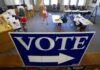
Today’s primary election in New York City includes democratic Socialists on the ballot, endorsed by New York Mayor Zohran Mamdani and U.S. Senator Bernie Sanders.
But in their true spirit, the Republicans and the corporate media are wringing their hands over the appearance of democratic Socialists as if this is an invasion from Mexico or Cuba.
Republicans have been sounding the alarm about Socialism since the Twenties, when labor unions were gaining members, and later as the New Deal legislation and the hated pension supplement, Social Security, were launched by the FDR presidency.
Republicans, America Firsters, KKK members, isolationists, anti-union forces, corporate executives, and other politicians who use fear and hatred as methods to build a political base have rolled out the socialism scare tactic whenever it suits them.
It looks like the U.S. was more open to new political ideas in the early part of the Twentieth Century than it is today. As cited in the book, A People’s History of the United States, by Howard Zinn, “In 1910, Victor Berger became the first member of the Socialist Party elected to Congress in 1911; seventy-three socialists were elected as mayors, and twelve hundred lesser officials in 340 cities and towns. The press spoke of ‘The Rising Tide of Socialism.'”
Today, the corporate media and cable outlets are using the same scare tactics against Socialists, but they continue to avoid the topic of corporate socialism since it is so profitable to their sponsors and owners.
Democratic Socialism: The Remedy to Income and Political Inequality
The primaries and the upcoming election have ratcheted up the level of political discussion and misinformation to unprecedented levels, and one of the most divisive slogans being thrown about is labeling Democrats as leftists, communists, Marxists, and socialists.
Republicans use these political philosophies as shorthand for anyone who opposes their agenda, but the reality is that the U.S. has never had significant socialist or Marxist movements. The political left in the U.S. has never had any long-lasting political influence. Still, it has influenced historic social programs, such as Social Security, Medicare, Medicaid, child welfare, and labor rights, but it has never significantly influenced financial and foreign affairs policies.
The exception for socialism, however, has been significant. And despite the decades-long Republican propaganda efforts, socialism does exist in a capitalist society, but it is known as corporate welfare. And this system is prevalent and expanding in the corporate sector.
The federal government spends $100 billion annually on corporate subsidies. These take the form of preventing the enforcement of antitrust legislation and the ever-increasing amount of federal money being paid to the largest U.S. corporations.
These subsidies are paid as money grants, tax breaks, and special favorable treatment for corporations through relaxed pollution laws, labor exemptions, and foreign investments.
But the subsidies also benefit average Americans. Some subsidies are used to subsidize production, helping producers offset expenses and sell products at a profit, or to make payments to other factors that affect production.
But corporate subsidies cross the line in a free-market economy, where supply and demand determine prices, and competition drives out inefficient participants. Even the politically and economically conservative CATO Institute has opposed corporate welfare for various reasons. The Cato Institute concluded that “corporate welfare and other special-interest subsidies and regulations should be abolished.”
So, if one of the nation’s most conservative think tanks says corporate welfare should be ended, why does it persist?
“Many federal programs and regulations harm the overall economy and are only sustained because powerful lobby groups support them,” according to the Institute.
Look at the Lobbyists
It’s not surprising that the industry sectors that receive the most corporate welfare are also among the most prominent Washington lobbyists. This helps explain why agriculture, financial institutions, oil companies, and utility companies receive the most subsidies.
Which Companies Get the Biggest Federal Subsidies
A 24/7 Wall Street study of the Federal Procurement Data System found that the federal government paid at least $2.3 billion to 30 companies in fiscal 2017. “Four companies on this list (Boeing, Lockheed, General Dynamics, Raytheon) were each awarded federal contracts worth over $14 billion – more than the entire budget for the Environmental Protection Agency or the Department of the Interior.” (For the complete list of 30 companies, use this link.)
A Case Study in Corporate Socialism
In the most visible examples of corporate Socialism, which occurred during breakdowns in the banking and investment sectors or during the pandemic, the Treasury Department paid over $1 trillion through the American Rescue Plan programs and tax credits to businesses and citizens. This was part of the $2.2 trillion Coronavirus Aid, Relief, and Economic Security Act (CARES) in late March 2020. The Act paid money to healthcare organizations, universities, and small businesses. Whether due to the way the law was written or the misadministration of funds, the U.S. Department of Labor estimated that in 2022, “about $2.2 billion in payment errors it identified were likely fraudulent. However, this amount did not include payments made through the four emergency UI (unemployment insurance) programs, according to the Government Accounting Office.
In non-emergency situations, corporate welfare, aka Socialism, has been done regularly since the end of World War II.
Beware of Unintended Consequences
Unsurprisingly, in a mixed market economy (subsidized large-cap Socialism) combined with substantial federal programs, Congress, lobbyists, and opportunists should ply this area, considering it fertile ground for unethical and gray-area illegal actions.
Take the case of the recent incident in which a Boeing 737 Max 9 lost a door mid-flight. Luckily, safety regulators focused on the quality control of Boeing’s production process to avoid a catastrophe. As Matt Stoller writes in the newsletter, BIG, Boeing has a special status as a U.S. corporation because it is one of the most subsidized companies in the U.S.
Stoller writes, “Boeing is a state-backed national champion, constructed by the state, financed by the state, protected by the state, and with much of its revenue supplied by the state. It may be the case that Boeing executives have more power over the government than the other way around, but that’s just a different way of saying the same thing. There’s a fused public-private entity here; the question is just who the decision-maker is.”
Like Wells Fargo, JP Morgan, and J.P. Morgan in the financial sector, Boeing and others in the military-industrial complex get massive subsidies ($14 billion for Boeing) and special treatment. Boeing received COVID money because the law provided subsidies to companies deemed “businesses critical to maintaining national security.”
Boeing carefully straddles the line between being a publicly traded and a federally subsidized dependent company. To do this balancing act, the Boeing board of directors has included military and politically connected directors, such as Republican presidential candidate Nikki Haley, Caroline Kennedy, and ex-Pentagon officials.  To show their appreciation, the median estimated base pay for being on the Boeing Board of Directors is $295,000 annually. Not bad for a part-time job.
The dual allegiance of companies like Boeing gives them latitude in how they spend federal subsidies and company profits. The Lever newsletter also found that “Boeing/Spirit execs paid themselves $800 MILLION & spent $68 BILLION on dividends/buybacks – while laying off workers & refusing safety investments experts say was necessary,” which could have prevented the dangerous blowout of the door mid-flight. The Lever points out that “one year of buybacks was more than the estimated cost of key safety upgrades” to the Boeing airplane fleet.
And how was this money used?: To increase salaries for the airplane executive. “Over the past decade, according to SEC filings, Boeing spent roughly $573 million on total executive pay, and Spirit paid its executives nearly $245 million. In a federal securities lawsuit, former Spirit employees alleged that production issues resulted from a failure to hire sufficient personnel,” according to the Lever.
Corporate Socialism is the Source of Political Corruption
So, as the political season accelerates, the next time you hear Republicans railing about the Marxists, communists, and socialists in government, remind friends that corporate welfare and bailouts in times of financial stress are built into the capitalist system. There is no sign they are going away.